Home › Commercial Concrete Repair and Restoration
Maintain safe operations with commercial concrete repair in Jonesboro, AR. We restore damaged slabs, fix joints, remove trip hazards, and patch spalled areas in warehouses and exterior paving. Our team works around your schedule to minimize downtime while improving safety and appearance. Schedule a walkthrough to identify commercial concrete repairs around your facility.
Superior Concrete Jonesboro provides professional commercial concrete repair throughout Jonesboro, AR, Arkansas and the surrounding area. Our licensed, insured crew delivers safe, clean, on-time work with a free estimate before anything begins. Call (870) 384-5589 or request your free quote.
Commercial Concrete Repair for Jonesboro Businesses
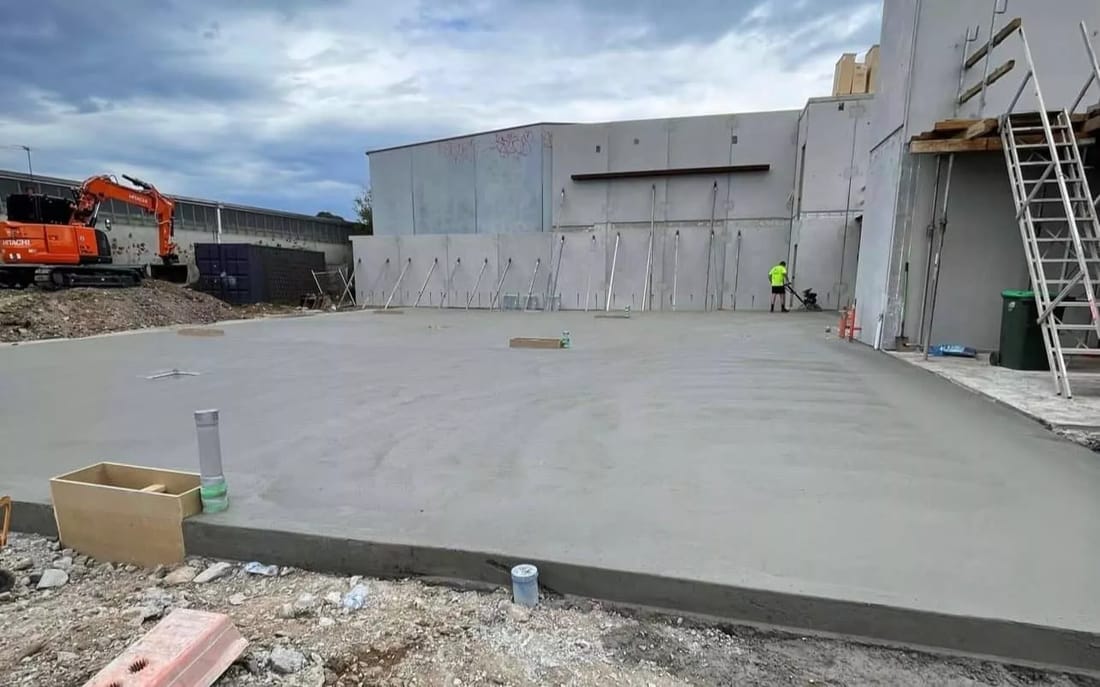
Commercial concrete in Jonesboro works hard every day. Loading docks get hammered by forklifts, parking lots see heavy truck traffic, and warehouse floors carry shelving and pallet loads. When concrete cracks, settles, or spalls, it is not just an eyesore. It can slow down operations, damage equipment, and create trip hazards that put your staff and customers at risk.
Superior Concrete Jonesboro focuses on commercial concrete repair and restoration that keeps businesses operating. We work on retail centers, medical offices, industrial plants, schools, restaurants, distribution facilities, and municipal sites across Jonesboro and surrounding Craighead County. Our team understands local soil conditions, Arkansas weather patterns, and the demands of high traffic concrete surfaces.
Instead of pushing full replacement every time, we evaluate whether targeted repair, slab stabilization, or sectional replacement will solve the problem for the long term. That approach can preserve your existing investment, shorten downtime, and control your budget without cutting corners on safety or durability.
Common Commercial Concrete Problems We See in Jonesboro
Jonesboro’s clay-rich soils and freeze-thaw cycles create predictable problems in commercial concrete. When we inspect a site, we typically see one or more of the following issues.
Cracking and joint failure: Hairline shrinkage cracks are often cosmetic, but wider, offset, or actively growing cracks indicate movement or load issues. Failed control and expansion joints let water in, which accelerates damage.
Settlement and sinking slabs: Poor subgrade compaction, drainage problems, or long-term loading can cause slabs to tilt or settle. You may notice ponding water in parking lots, forklift bumps in warehouses, or door thresholds that no longer align.
Spalling and surface scaling: Deicing salts, forklift traffic, and moisture intrusion can cause the top layer of concrete to flake or peel. On exterior walkways and steps, this quickly becomes a slip and trip hazard. On interior floors, it can damage wheels and create dust problems.
Rebar corrosion and structural distress: In older structures or poorly protected concrete, reinforcing steel can rust. This expansion breaks the surrounding concrete, showing as cracking and rust staining. Left unchecked, this can become a structural issue around columns, beams, and elevated slabs.
Drainage related problems: We often see curbs, gutters, and loading dock aprons that have settled, which sends stormwater toward buildings instead of away from them. Over time that undermines the subgrade and damages both slab and foundation.
Our Step-by-Step Commercial Concrete Repair Process
Superior Concrete Jonesboro follows a structured process so business owners know exactly what to expect and why each step matters.
1. Site assessment and diagnostics: We inspect all affected areas, map cracks and settlement, and identify drainage patterns. When needed, we use straightedges, laser levels, or core sampling to understand slab thickness, base condition, and moisture levels.
2. Root cause analysis: Instead of just patching visible damage, we determine the underlying cause. For example, is a warehouse floor cracking from overloaded racking, inadequate joints, or failing subgrade? Is a parking lot heaving because of poor drainage at the edge? This determines whether we recommend slab stabilization, joint redesign, or only surface repairs.
3. Repair strategy and phasing plan: We prepare a written scope that outlines the repair methods, work areas, materials, and expected lifespan. For active businesses, we also create a phasing plan that sequences the work around your operations so you keep access to entries, bays, or drive lanes.
4. Concrete repair execution: Depending on the project, this can include crack routing and sealing, spall repair with polymer modified materials, slab lifting or void filling, joint reconstruction, or sectional slab replacement. We isolate work zones, erect safety barriers, and communicate each day’s plan with your onsite manager.
5. Curing, protection, and quality checks: After repairs, we manage curing conditions as much as possible within your operational constraints. This can involve curing compounds, moisture control, and traffic restrictions. We then perform final inspections, verify elevations where lifting was done, and ensure joints and transitions are smooth and safe.
6. Documentation and maintenance guidance: You receive a summary of the work performed, materials used, and any maintenance recommendations, such as resealing joints after a set period or redirecting downspouts to protect the repaired slab.
Repair Methods and Material Options That Actually Work
Commercial concrete repair is not one-size-fits-all. Superior Concrete Jonesboro selects materials based on the slab’s use, traffic type, and exposure to chemicals or weather.
Crack repair options: For non-structural cracks, we typically clean, route, and fill with a flexible polyurethane or polyurea joint filler that accommodates movement and blocks moisture. For structural or wider cracks, we may use epoxy injection to bond the slab or doweling techniques to tie separated panels together.
Slab lifting and stabilization: Where concrete has settled but is otherwise sound, we can often lift and support it instead of demolishing and repouring. Techniques include cementitious grout pressure injection (traditional mudjacking) or lightweight polyurethane foam injection. Choice depends on load, thickness, and sensitivity to added weight. For industrial floors with heavy racking, we lean toward solutions that minimize added load while providing stable, uniform support.
Spall and edge repair: For damaged joints, dock edges, and fork truck aisles, we remove loose material, saw-cut to sound concrete, apply bonding agents, then rebuild with high strength, fast set repair mortars or polymer modified concretes. Where downtime must be minimal, we specify rapid setting products that can handle forklift traffic in hours instead of days.
Surface restoration and overlays: When the surface is broadly worn but structurally solid, we can apply industrial grade overlays. These range from thin polymer overlays for interior warehouses to thicker bonded overlays for exterior drive lanes and loading areas. We select slip resistance, abrasion resistance, and chemical resistance based on your operations, including compatibility with oils, solvents, or food grade sanitation chemicals.
Joint reconstruction: Failed saw cuts or old construction joints are often the starting point for bigger problems. We may cut new joints where original spacing was inadequate, reestablish proper joint profiles, and fill with materials that can stand up to pallet jack and forklift traffic without raveling.
What Drives the Cost of Commercial Concrete Repair
Understanding the main cost drivers helps facility managers build realistic budgets and compare proposals fairly.
Extent and severity of damage: Small, localized repairs to a few joints cost much less than widespread cracking and settlement across an entire lot or warehouse. We often propose tiered plans, such as priority safety repairs now, followed by scheduled restoration of lower risk areas.
Access and operational constraints: Working around 24 hour operations, limited access windows, or secure areas can extend labor time. For example, night and weekend work for retail centers on busy corridors in Jonesboro may carry a premium but avoids revenue loss during business hours.
Subgrade and drainage corrections: If the underlying soil or drainage is failing, cost increases because we must excavate, correct slopes, install base materials, or add drainage features like French drains or additional inlets. Skipping these steps usually leads to recurring problems.
Material selection and performance requirements: Fast setting, high strength industrial repair products cost more than basic materials, but they reduce downtime and perform better under heavy traffic or chemical exposure. We explain these tradeoffs clearly so you can match performance level to how the space is used.
Project size and mobilization: Very small repair jobs can have higher cost per square foot due to fixed mobilization and setup costs. When possible, we help clients bundle multiple repair areas into a single phase to improve overall cost efficiency.
Jonesboro Specific Considerations and Best Timing for Repairs
Local climate and soil conditions in the Jonesboro area affect how and when commercial concrete repair and restoration should be scheduled.
Seasonal timing: For most exterior repairs, the best windows are typically spring and fall when temperatures are moderate and curing conditions are more predictable. In hot Arkansas summers, we take extra steps to manage evaporation and surface temperatures, such as working earlier in the day, using evaporation reducers, or selecting products designed for warm weather placement.
Rain and moisture management: Sudden storms are common in northeast Arkansas. For exterior slab work, we plan around short term forecasts, protect open repairs from rain, and ensure subgrades are not saturated before placing new material. Trapped moisture leads to weak bonds and early failure, so we will postpone if conditions are not acceptable.
Clay soils and movement: Many parts of Jonesboro sit on expansive clays that shrink and swell with moisture changes. When designing repairs or replacements, we consider joint spacing, base materials, and drainage improvements that help manage this movement instead of fighting it. In certain problem areas, we may recommend thicker sections or reinforced slabs to improve long term performance.
Local codes and coordination: For projects that affect public sidewalks, ADA access, or city drainage systems, we coordinate with local requirements and permitting. This helps avoid issues during inspections and ensures slopes, curb ramps, and transitions meet accessibility guidelines.
Why Jonesboro Businesses Choose Superior Concrete Jonesboro
Commercial concrete repair and restoration is specialized work that must balance durability, safety, downtime, and cost. Superior Concrete Jonesboro brings focused experience with local commercial sites, from small retail parking lots on Caraway Road to industrial facilities near the bypass.
We do not treat repairs as quick cosmetic fixes. Our approach is to identify root causes, use materials that match the actual loading and environment, and phase work so your business can keep operating. Facility managers, property owners, and general contractors rely on us for honest evaluations, clear scopes, and reliable scheduling.
Before you approve any large scale replacement, it is often worthwhile to evaluate repair and restoration options. In many cases, strategic slab lifting, joint reconstruction, and surface restoration can add years of life to existing concrete while controlling disruption and cost.
If you are seeing cracking, settlement, ponding water, or spalling in your commercial concrete in Jonesboro or nearby communities, Superior Concrete Jonesboro can inspect the site, explain practical options, and put together a detailed commercial concrete repair plan that fits your operational needs and budget.